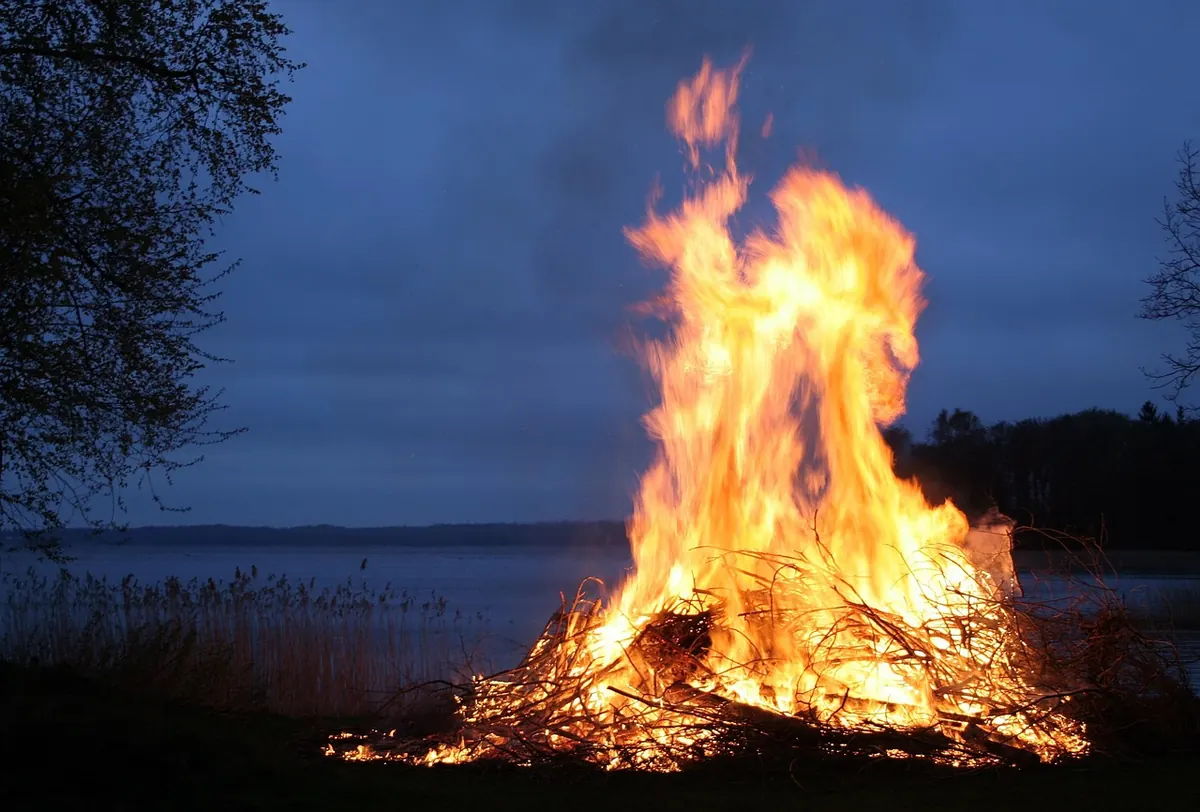
A fire does half the work. It gives people something to look at, it keeps their hands busy, and it makes a silence feel deliberate rather than awkward. The other half is yours, and it comes down to three things: pace, voice and shape. A folktale told well around a campfire is not a recital of memorised words. It is a story you can see, told to people you can see, at a speed that suits both.
For a first telling, five to eight minutes is plenty. Long tales are not more impressive; they are just harder to hold. Look for a story with a clear spine and few characters: the bargain that goes wrong, the youngest sibling who succeeds where the others failed, the stranger at the door, the thing stolen and won back.
If you cannot summarise a tale in two sentences, it is too big for your first fire. Traditional collections are full of short, sturdy stories. Whuppity Stoorie, The Hedley Kow, The Fisherman and His Wife and dozens of variants of the three-questions tale all work beautifully outdoors. Read six or seven, then choose the one you keep thinking about. That one will carry you.
Folktales are built from repetition and return. Three attempts, three roads, three questions. Learn the bones rather than the wording, and you will never lose the thread, even if someone arrives late or a log collapses in the middle of a sentence.
Seven beats, maybe eight. Write them on a small card, then put the card away. If you lose your place mid-tale, go back to the last thing you can picture clearly and describe it. Your listeners will not know anything has gone wrong.
Most beginners gallop. Nerves push the speed up, and the ending arrives before anyone has had time to feel it. The cure is not to speak slowly throughout, which becomes a drone, but to vary deliberately.
Traditional openings earn their place. “Once there was, and once there wasn’t” or “In a time when the rivers ran the other way” tells the circle that we are somewhere else now. Then give two concrete details and stop. A cottage at the edge of a wood, a dog that would not stop barking. Five details blur; two stick.
Pause before a reveal, not after it. Pause when a character asks a question. Pause when you change speaker. A count of three in your head feels enormous to you and perfectly natural to everyone else. Silence is not dead air; it is the audience catching up. And keep a short sentence for after a long one. He walked for three days. Nothing followed him. The brevity does the work.
Volume, speed and pitch. You do not need accents. Unless you genuinely have the accent you are imitating, it slides quickly into caricature, and it distracts from the tale. Give characters a habit instead of a voice: the old woman speaks in short, flat sentences; the youngest brother only ever asks questions; the stranger repeats your last three words back at you. That is far more vivid than a wobbly regional twang.
Speak from the chest, not the throat, and direct your words at the person sitting furthest away — they will carry to everyone in between. Never shout into smoke; turn your head, or move to the other side of the fire. Keep water nearby, and don’t fight a coughing fit. Stop, drink, apologise briefly, carry on.
Your audience will tell you everything you need to know if you look at them. Stillness and leaning in means leave it alone; do not speed up. Restlessness, shifting, whispered side conversations mean tighten — cut a repetition from the pattern and move towards the turn. Laughter needs a moment; wait for it to settle before you continue, or you will lose the next line under it.
If someone interrupts with a question, do not break the spell. A nod and “we’ll find out” will carry you past it. Children need shorter tales and clearer repetition than adults; with a mixed group, choose a simple spine with one genuinely dark turn, and put the youngest nearest the fire so you can watch their faces.
If you learned a tale from a particular collection, it costs nothing to say so, and it sends people to good books afterwards.
Notice what worked while it is fresh: which pause got you that hush, which line got the laugh, where you hurried. Write it down. Tell the same tale again within a fortnight — the second telling is where it stops being someone else’s story and becomes yours.
And when you reach the end, land the last line and stop. Do not explain the moral, and do not add a postscript. Let the fire crackle for a few seconds. That silence belongs to you as much as the story did.
Photo: 12019 / Pixabay